
Define what the decoration quotation includes
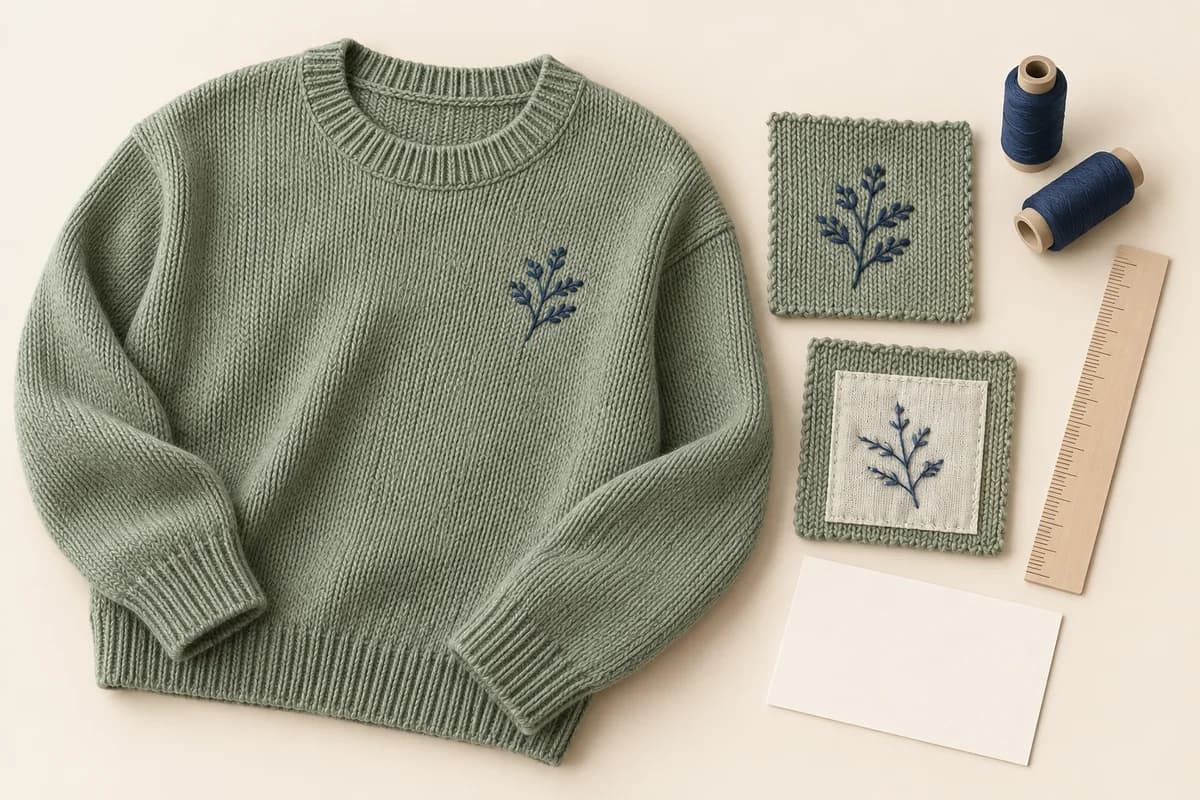
For a brand or importer ordering an embroidered sweater collection, start with the artwork file, finished motif width and height, colour references and quantity by style, colour and size. State whether the design is direct embroidery or a separately attached badge. Ask the supplier to assess feasibility on the proposed yarn and knit structure. Confirm digitising, trial samples, thread, backing, application and any finishing charges in the quotation; a screen image does not establish the production method.
Approve a stitched trial on the intended knit
Request a trial using the proposed yarn, gauge, stitch structure and garment colour. A result on woven cloth does not approve the same artwork on a knitted sweater. Review outlines, small details, coverage and the surrounding fabric both relaxed and gently handled. Ask for a simplified version if fine artwork cannot reproduce clearly at the requested size. Agree any artwork change before the production file is released.
- Keep the physical approved trial and its artwork revision together; record the motif dimensions and thread colour references.
- Check representative light and dark garment colours and materially different knit structures rather than assuming one trial covers all variants.
Review backing and the reverse side
Backing supports the fabric during embroidery; a topping may help keep stitches from sinking into a textured knit. Madeira explains these different functions in its stabiliser guidance. Select the actual combination through trials with the embroiderer. Review the amount left inside, edge trimming, show-through and feel against the intended wearing layer. Record what is retained or removed and when; do not prescribe one backing weight or stitch density for every sweater.
Measure placement on the finished garment
Define left and right from the wearer’s perspective. Mark the measurement starting points, motif boundary and orientation on a drawing. State whether placement is measured before or after the agreed finishing process. Approve how the position works across ordered sizes, especially for a large chest motif or sleeve decoration. Set design-specific acceptance limits and the measuring method with the supplier; there is no universal placement tolerance in this guide.
| Approval item | Instruction to record | Evidence to retain |
|---|---|---|
| Artwork | Revision, finished dimensions and thread colours | Artwork file plus stitched trial |
| Position | Wearer’s side, garment landmarks and size rule | Marked drawing plus finished sample |
| Support | Backing, topping and removal or trimming method | Front and reverse sample views |
| Acceptance | Appearance, placement limits and care trial conditions | Written approval and recorded results |
Check again after finishing and the agreed care trial
Review a finished garment made through the proposed embroidery, assembly and finishing sequence. Agree a care trial appropriate to the product and intended instructions, including who performs it and the acceptance criteria. Compare motif shape, surrounding puckering, loose threads, backing appearance and garment measurements before and after. A good-looking unwashed swatch does not establish performance after care. Resolve failed checks and approve the revised sample before production; do not describe a visual trial as certified testing.
Release a complete brief and inspect against it
Link the approved embroidery file, physical sample, placement drawing and finishing instructions to the same order revision. Confirm whether decoration happens on panels or assembled garments, which variants the approval covers and who can approve substitutions. During production, compare the front and reverse with the retained reference and record affected quantities when a problem occurs. Hold questionable pieces for a decision instead of concealing them in a shipment.
- For a WTBF quotation, send the artwork, motif dimensions, intended position, yarn or reference garment, quantity split and delivery country through the bulk inquiry form.
- Ask for the sample and decoration route, cost scope and capacity-based schedule to be confirmed. Additional trials or changes can move the production release date; dispatch and arrival are separate milestones.
Questions about this guide
Can I approve sweater embroidery from a digital mockup?
A mockup helps agree artwork and position, but a stitched trial on the intended knit and a finished garment are needed to approve appearance, backing and placement.
Does one embroidery sample cover every colour and size?
Only the variants explicitly covered by the approval. Review different knit structures, contrast colours and size-dependent placement, and agree which additional samples are needed.