
Ask how each part of the sweater will be joined
An importer buying a fine-knit pullover needs more than a yarn specification and silhouette. Ask the supplier to identify how the shoulders, sleeves, side seams and neckband will be joined. If linking is requested, identify the locations rather than writing only “linked sweater.” Confirm whether the quotation includes the proposed joining, seam finishing and sample revisions. SHIMA SEIKI describes conventional knitwear as separate panels assembled afterward, alongside a distinct whole-garment approach. This is construction context, not a claim about WTBF equipment or a promise that every style can use either method.
SHIMA SEIKI — conventional panel assembly and whole-garment construction
Approve the finished inside and outside together
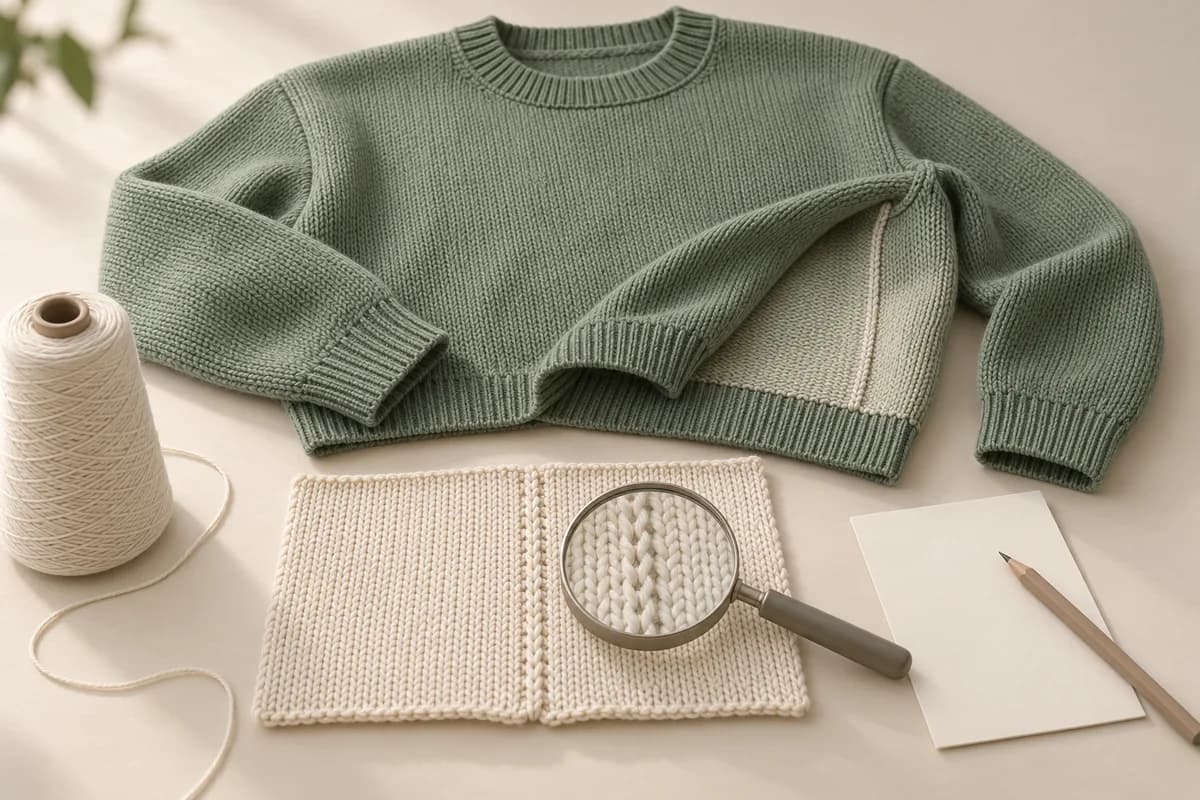
Review a physical garment made with the intended yarn, knit structure and finishing. Check the outside seam line and the corresponding inside join on the same sample. Record puckering, unwanted bulk, visible gaps, unsecured yarn ends and any mismatch at the underarm or shoulder. A close-up should identify the garment, seam location and specification revision; keep it linked to the retained sample. Agree which appearance differences are acceptable and which require correction. Do not use a digital rendering as the sole reference for a three-dimensional join.
Turn seam expectations into an approval checklist
Define the checks with the supplier before the production sample is accepted. Use a seam map or marked garment images to identify locations, then record the agreed construction and result for each one. The following is a procurement checklist, not a laboratory method or a universal acceptance standard. Numerical limits and inspection coverage must be agreed for the actual order.
| Seam location | Record and check | Decision to confirm |
|---|---|---|
| Shoulder and armhole | Join construction, alignment and visible bulk | Approve the finished seam profile |
| Side seam and underarm | Inside finish, junction alignment and loose ends | Resolve gaps or concentrated bulk |
| Neckband attachment | Attachment line, opening and dressing observations | Agree acceptable appearance and extension |
| Any patterned join | Specified motif or stripe reference at the join | State where matching is required |
Check movement and care using an agreed procedure
Review the finished garment during the intended dressing and movement trial, including the neck opening and sleeve or underarm joins. Agree how far and how often the relevant area is extended, which garment sizes are checked and what damage or restriction would fail the review. Avoid an undefined instruction to “pull hard.” If strength, extension or durability testing is required, specify the method, sample preparation and acceptance criteria with the testing provider. Keep those tests separate from visual inspection. Repeat the relevant seam observations after the agreed care trial; record opening, distortion or broken joining yarn against the same sample reference.
Release the joining reference and control changes
Keep the approved garment, seam map and written decisions under one revision. Record the body yarn, joining yarn, panel construction and finishing details needed to reproduce the approved result. If the supplier proposes a different joining yarn, method or finishing process, request an impact review before the affected production proceeds. Recheck seam appearance, measurements and the agreed movement or care results as appropriate. Set production inspection coverage across the relevant styles, colours and sizes, and agree who reviews exceptions and authorizes release. An approved sample does not replace checks on the production lot.
Send a seam-specific brief with the bulk inquiry
Send WTBF the style reference, yarn direction, seam close-ups or preferred construction, and quantities by style, colour and size. Identify sensitive locations, intended wearer, required tests, destination and target arrival date. Ask for a quotation covering the proposed joining and approval steps, with costs and scheduling conditions confirmed for the order. Large orders require a capacity-based schedule; a dispatch date is different from arrival. If a seam change affects the sample or material plan, confirm the revised approval and production timing before release.
- Mark each seam location and the approved reference revision.
- Confirm joining yarn, finishing and required appearance or performance checks.
- Name the reviewer and agree how failed checks, repairs and rechecks will be handled.
Questions about this guide
Does approving the sweater fit also approve its seams?
Fit approval alone does not record seam construction, inside finish or performance. Approve those requirements explicitly on the finished sample and retain the agreed reference.
Is one joining method suitable for every sweater?
The choice depends on the yarn, knit construction, garment design and agreed appearance and performance. Ask the supplier to propose a workable method and approve its finished result before bulk production.