Turn the layering risk into a specific buying requirement
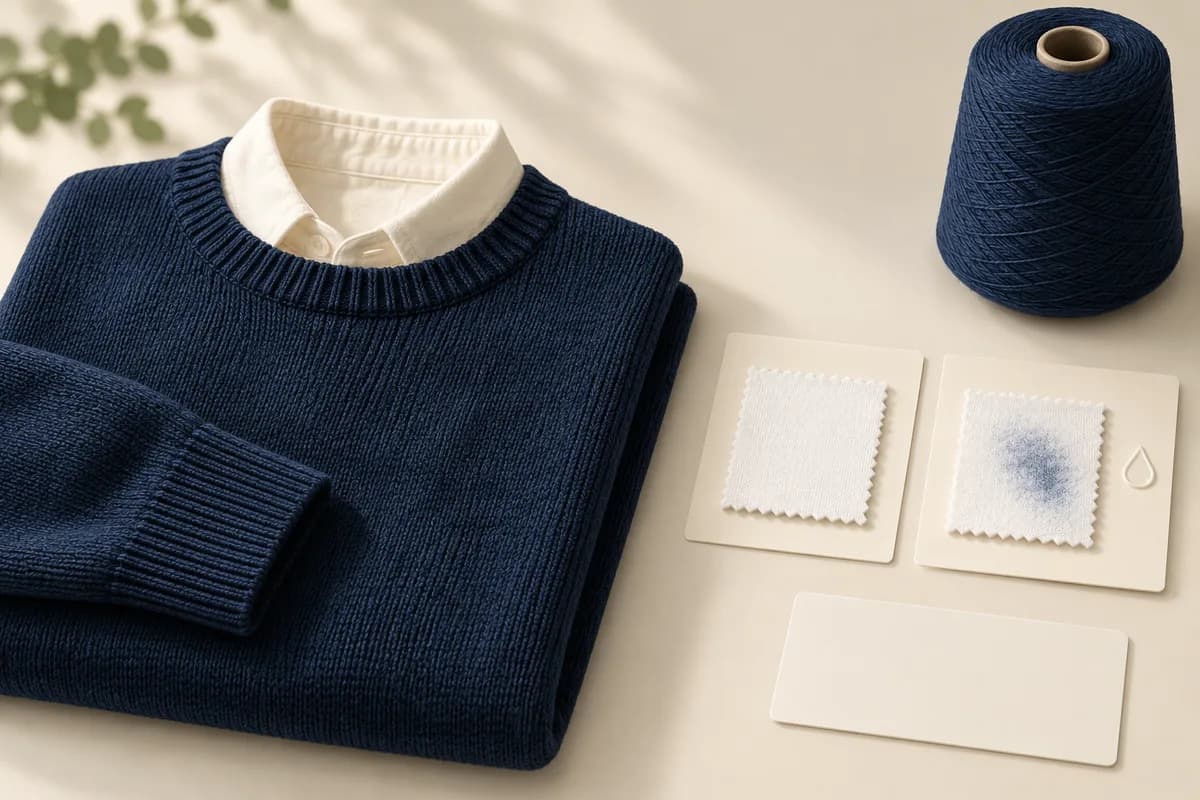
An importer ordering navy pullovers for a collection styled with cream shirts needs more than a dark-blue shade reference. Identify which garment surfaces can contact pale clothing or accessories during normal wear. State the yarn, colour, knit construction and finishing route proposed for the order. Include separate components such as dark ribs or contrast panels where relevant. Ask the buyer to identify the required performance specification and intended use before samples are assessed. Do not assume that a darker shade must fail, or that a lighter alternative will pass without checking.
Agree dry and wet rubbing evidence separately
ISO 105-X12:2016 describes a method for assessing textile colour resistance to rubbing off and staining other materials. Its public scope includes tests with dry and wet rubbing cloths. Ask a testing provider to confirm the applicable method and edition, specimen preparation, test direction, conditioning, wetting and assessment conditions. Record separate dry and wet results with the agreed limits and report requirements. The method name alone does not specify a buyer’s pass grade. An informal rub with a tissue or a damp shirt cannot be reported as a result under the standard.
ISO 105-X12:2016 — public scope of colourfastness to rubbing
Test the proposed finished material and identify coverage
Link each submitted sample to its style, colour reference, yarn dye lot, finishing revision and sample stage. Agree whether suitable finished knit specimens or specimens taken from garments are required, and how many samples the provider needs. A yarn report does not automatically cover the finished sweater. Decide which colours, contrast components and production lots require separate evidence; one navy sample does not release black, burgundy or a later dye lot. Where pre-production material differs from bulk material, record which approval remains open and when representative bulk samples will be checked.
| Decision | Evidence to retain | Condition to confirm |
|---|---|---|
| Product coverage | Style, colour, dye lot, finishing and sample identity | Which components and lots the result covers |
| Dry and wet checks | Named method, separate results and report | Buyer-approved limits for each condition |
| Production release | Report review, affected stock and written decision | Reviewer, recheck and shipment authorization |
Keep rubbing, washing and fibre shedding separate
Rubbing transfer concerns colour staining another material through rubbing. Colour change or staining during washing needs its own agreed test brief; dry or wet rubbing results cannot replace it. Loose dark fibres on a pale shirt can also look like transferred dye, so describe the observation and ask the testing provider to distinguish the issue rather than diagnosing it from a photograph. A practical pairing review with the intended shirt or accessory can support product development, but it does not replace a specified laboratory method or prove performance against every possible material. Keep these observations separate in the approval record.
Resolve failures before changing or releasing production
If a result misses the agreed limit, identify the affected sample and material lot, then ask for a corrective proposal. A different yarn source, dyeing route, finishing treatment or shade can change handfeel, appearance, cost and timing as well as test performance. Approve the revised material and retest the relevant requirements before release. Do not treat extra washing or a new care warning as an automatic remedy. For bulk goods already made, hold the affected stock for a written decision, keep lots identifiable and agree the scope of further checks. A revised sample does not automatically clear earlier production.
Put the test plan and release points into the bulk RFQ
Send WTBF the sweater reference or tech pack, intended pale layers, yarn and colour priorities, quantities by style and colour, destination market and required arrival date. Attach the buyer’s dry and wet rubbing requirements, sample coverage, laboratory or report needs and named approval contact. Ask WTBF to confirm feasible material options, sample quantities, testing responsibility, charges and production checks in the quotation. Allow for report review and any corrections before production or shipment release. Confirm a capacity-based schedule after material and approval requirements are known; the arrival deadline and factory dispatch date are separate milestones.
Questions about this guide
Does a correct shade prove resistance to rubbing transfer?
No. Shade approval compares the target colour. Rubbing colourfastness assesses staining of another material under specified conditions. Approve both requirements separately.
Can one passing colour release the entire sweater order?
Only the explicitly agreed coverage can be released. Identify the colours, components, material lots and finishing revisions represented by the evidence, then resolve any remaining checks before release.