All articles06

Bulk buying · Storage and display

Bulk knitwear: approve folded storage and hanger display before delivery

For a wholesale collection moving from cartons to retail rails, agree how the finished knitwear will be stored and displayed before approving bulk delivery. Compare identified samples under the intended handling conditions and keep arrival inspection separate from later display changes.

By WTBF · Knitwear buying guides

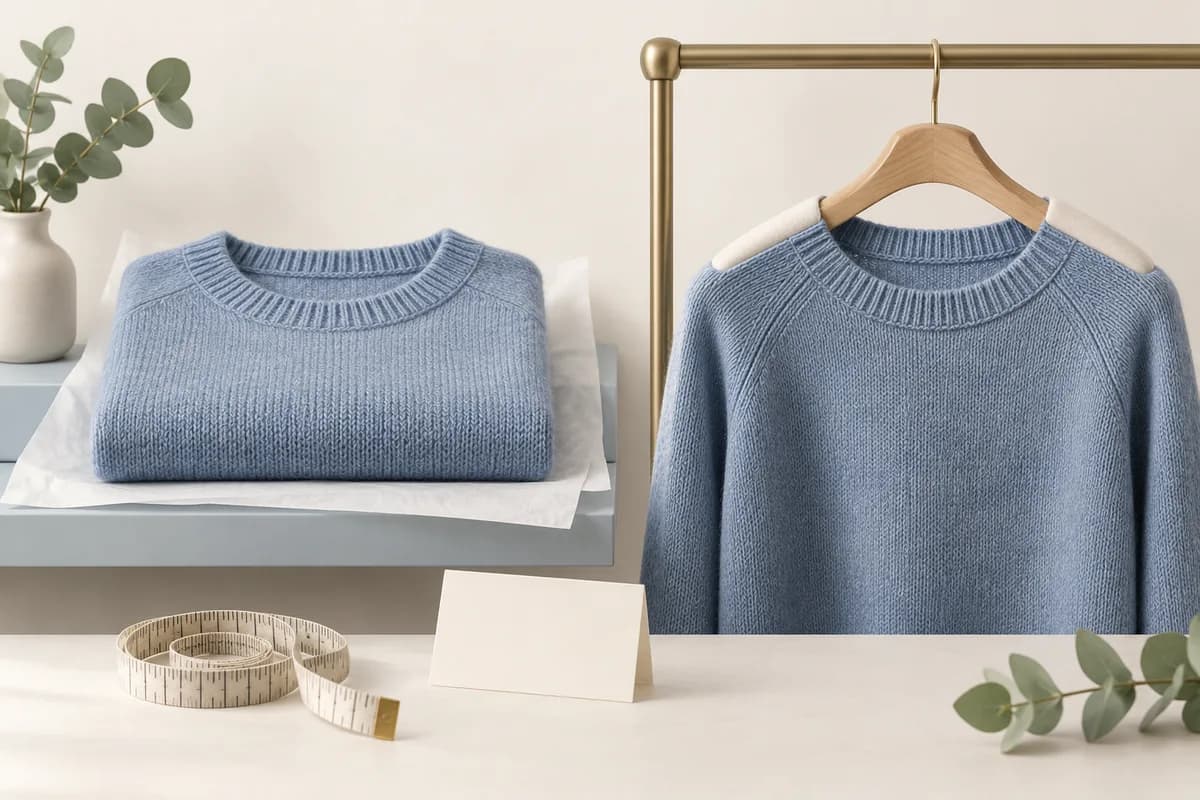
Concept illustration of a folded blue sweater on tissue beside a matching sweater on a padded hanger, with a measuring tape and blank approval card.

Separate storage from the retail display brief

Tell the supplier whether goods will remain folded in cartons, sit on shelves or hang on retail rails. Identify the intended storage period and display duration as conditions to agree, rather than assuming a universal safe time. Woolmark advises folding wool knits for storage to avoid stretching. That guidance is a starting point for wool garments, not proof that every blend or construction behaves alike. Review the actual finished style, particularly a heavy or loosely knitted garment. A hanger shown in a sales image does not establish an approved storage method.

Woolmark: folding wool knitwear for storage

Keep an untouched finished reference

Identify the style, colour, size, yarn reference, knit structure and finishing revision of each comparison garment. Retain one finished garment flat under agreed conditions as a control. Use separate pieces for folded storage and display trials. Record initial garment length, shoulder shape and other buyer-selected measurement points using the same method. Note any steaming, pressing or stretching already applied. Choose representative sizes and constructions together; a small lightweight sample alone may not represent a heavier long cardigan.

Write a practical handling trial

For the folded comparison, agree the fold pattern, tissue or support, stacking load, packaging and duration. For display, agree the hanger width, shoulder shape, padding, closure position and duration. Review the actual proposed hanger rather than approving its material name alone. Keep conditions repeatable and photograph the garment before handling, immediately afterwards and after the agreed flat recovery period. Record persistent shoulder marks, length change and creasing separately. This is a buyer-defined handling comparison; do not present it as a laboratory standard or a guarantee for every shop.

Decisions to close before bulk release
StageRecordAgree in advance
Folded storageFold, support, stack and durationAcceptable creasing and shape
Rail displayExact hanger and display conditionsShoulder and length requirements
ReceivingUnpacking and flat recovery conditionsMeasurement and claim procedure

Agree recovery and permitted preparation

Specify when measurements are taken after unpacking or removal from a rail. A garment measured while hanging should not be compared directly with a flat reference under a different preparation method. If steaming or pressing is proposed, check the care instructions and agree the process before using it on saleable goods. Record results before and after any permitted treatment. Do not conceal a persistent shape problem by repeatedly stretching the sample back into size. If hanger or fold changes are needed, repeat the comparison and confirm any packing cost or timing effect.

Carry the approval through packing and receiving

Keep the approved fold or hanger reference linked to the packing specification and purchase order revision. Confirm who supplies hangers, whether they travel with the garments and how unsupported changes are stopped. At receiving, identify carton and production lot, photograph the unopened packing arrangement, then follow the agreed unpacking and recovery method. Retain affected garments and a control while the parties review a discrepancy. Separate evidence of condition on arrival from changes after warehouse stacking or retail display; a single photograph does not establish cause or responsibility.

Include the handling route in a bulk RFQ

Send WTBF the garment reference, material priorities, quantities by style, colour and size, delivery country and intended warehouse and retail handling route. Include hanger details, fold requirements, proposed comparison conditions and the acceptance decisions still open. Request separate confirmation of sample development, trial responsibility, packing materials and any external testing requirement. Agree approval milestones, factory dispatch and destination arrival separately against the order scope and available capacity. Use the bulk inquiry form to ask for a project-specific quotation and sample plan; keep a folded supply option if rail display remains unapproved.

Questions about this guide

Does a padded hanger guarantee that a sweater will keep its shape?

No. Review the exact hanger with the finished garment and the agreed display conditions. Padding alone does not approve shoulder shape or garment length.

Should arrival measurements be taken immediately after opening a carton?

Agree the unpacking, preparation and flat recovery conditions before shipment. Use the same method for the retained reference and receiving samples, and record any treatment separately.

Discuss your knitwear projectBack to Blog