
The direct answer: verify capacity against a dated order plan
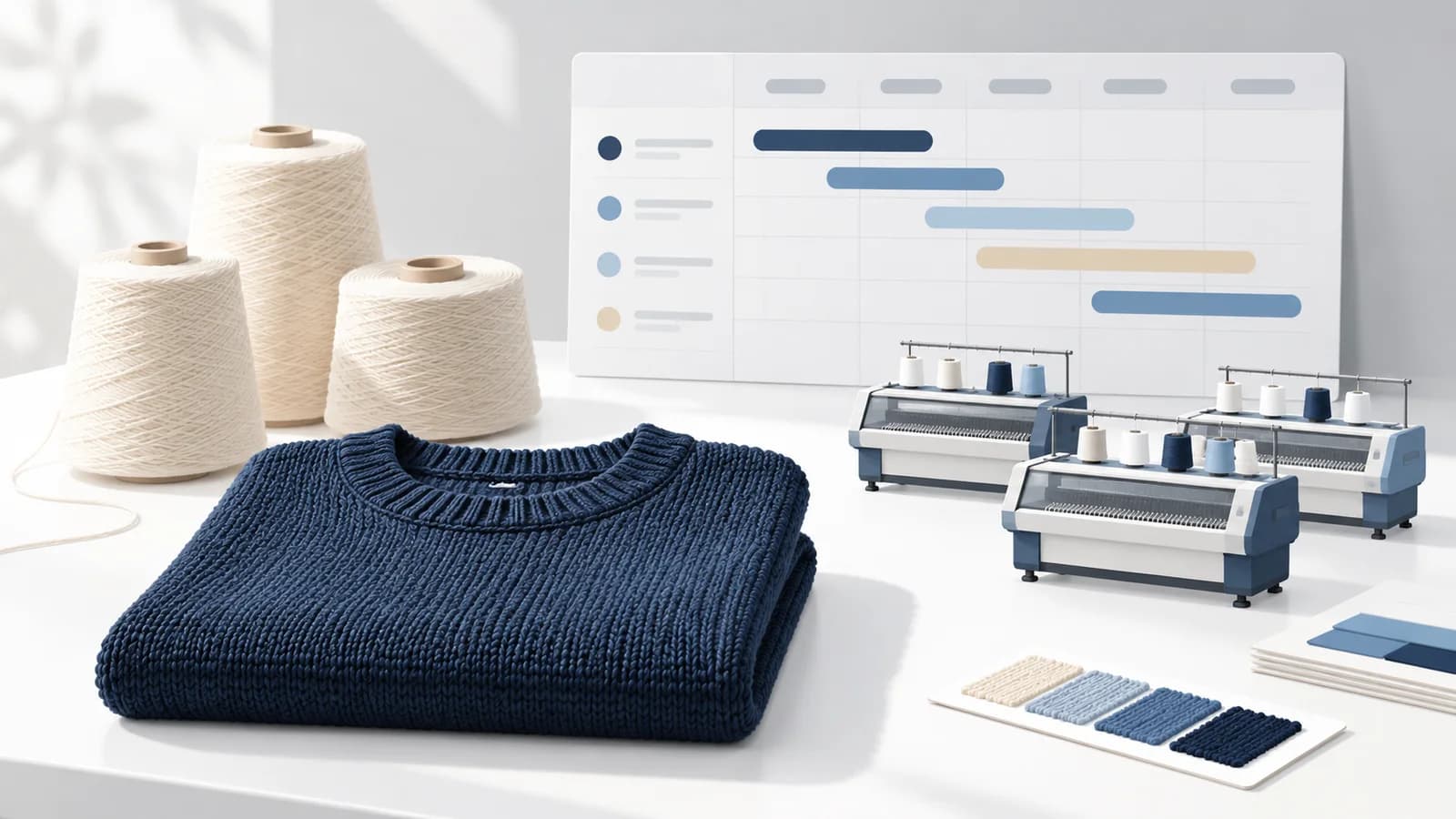
A bulk knitwear supplier should be evaluated against the actual order, rather than a single factory-size number. Ask for a plan that connects material availability, sample approval, knitting, assembly, finishing, inspection and packing to the requested dispatch dates. Available order capacity means the production a supplier can allocate within your time window after existing commitments and required processes are considered. Confirm who owns each milestone and what happens when an approval is late. This guide is a purchasing checklist, not evidence that a particular factory has reserved capacity for your project.
Separate factory scale from available production slots
WTBF reports a 10,000 m² factory, 100 employees, 500 machines and annual capacity of one million garments. These company-supplied figures were confirmed on 6 October 2026 and describe the stated manufacturing scale; they are not an independent capacity audit or a reservation for a buyer. Ask which knitting equipment, assembly and finishing resources your style requires, and whether those resources can be allocated during the proposed window. Do not divide annual output by days and treat the result as a promised daily rate: style complexity, materials and existing orders affect the plan. Confirm current availability when the quotation and order schedule are agreed.
Make materials and approvals part of the capacity check
Provide quantities by style, colour and size, the yarn composition or development direction, knit structure, measurements, trims and packing requirements. Ask whether yarn and colours are available, require sourcing or remain subject to approval. Record the date materials are expected to be ready and the sample version that can release production. A machine slot alone cannot resolve missing yarn or an unapproved garment. If a colour, trim or fit change is still being considered, show it as an open decision with an owner and deadline. Reconfirm feasibility after a material or specification change.
- Quantity breakdown for each style, colour and size
- Material readiness and colour approval dates
- Approved garment and measurement specification
- Named approval owner and change-control contact
Check the complete process rather than knitting alone
Request a stage-by-stage plan covering the operations needed for your garment. Assembly, washing or finishing, decoration, inspection and packing can each affect readiness for dispatch. Ask which operations are performed by the supplier and which, if any, depend on another facility; agree how those dates and quality requirements are controlled. The following table is a planning framework, not a WTBF production record or a universal lead-time standard. Use dates and acceptance requirements agreed for your own order.
| Stage | Evidence to agree | Question to resolve |
|---|---|---|
| Materials | Yarn, colour and trim readiness dates | Which inputs remain unapproved or unavailable? |
| Production | Approved specification and allocated production window | How do existing orders affect this window? |
| Finishing and inspection | Required processes and review milestones | What must be completed before packing? |
| Packing and dispatch | Batch quantities, packing instructions and dispatch dates | What is included in each shipment? |
Agree milestones, dependencies and a revision rule
For staged deliveries, define the quantity, destination and dispatch requirement for every batch. Separate the factory dispatch date from the required arrival date and estimated transport time. WTBF’s three-day sampling and seven-day dispatch options apply only to eligible projects after requirements and materials are confirmed; large orders require a capacity-based schedule. Ask how a delayed approval or unavailable input changes the affected batch, and who will communicate a revised plan. Keep the current approved version of the schedule with the order specification. A capacity statement should not silently override material, sample or inspection conditions.
Turn the evaluation into a clear sourcing inquiry
Send your product reference, quantity breakdown, yarn direction, approval deadlines and delivery requirements together. Ask WTBF to assess the feasible production route and identify the details that must be settled before capacity can be confirmed. Reference images and tech packs can be emailed after the initial inquiry. Small orders of 50–100 pieces remain available, while projects of 1,000–1,000,000 pieces are assessed against the agreed specification and schedule. Compare suppliers against equivalent requirements, document unresolved assumptions and approve the final commercial and production details before placing the order.
Questions about this guide
Does annual capacity prove my order can ship on time?
No. Annual capacity describes factory scale. Your order needs an agreed schedule that accounts for material availability, approved specifications, existing commitments, finishing and inspection.
What should I send to check bulk order feasibility?
Send the garment reference, yarn direction, quantities by style, colour and size, approval deadlines, delivery destination and required arrival date. Identify which details are fixed and which still need development.
Can WTBF ship every large sweater order in seven days?
No. Seven-day dispatch is a conditional option for eligible projects after requirements and materials are confirmed. Large orders require a capacity-based schedule; transport time is additional.