
The direct answer: make every shipment a defined release
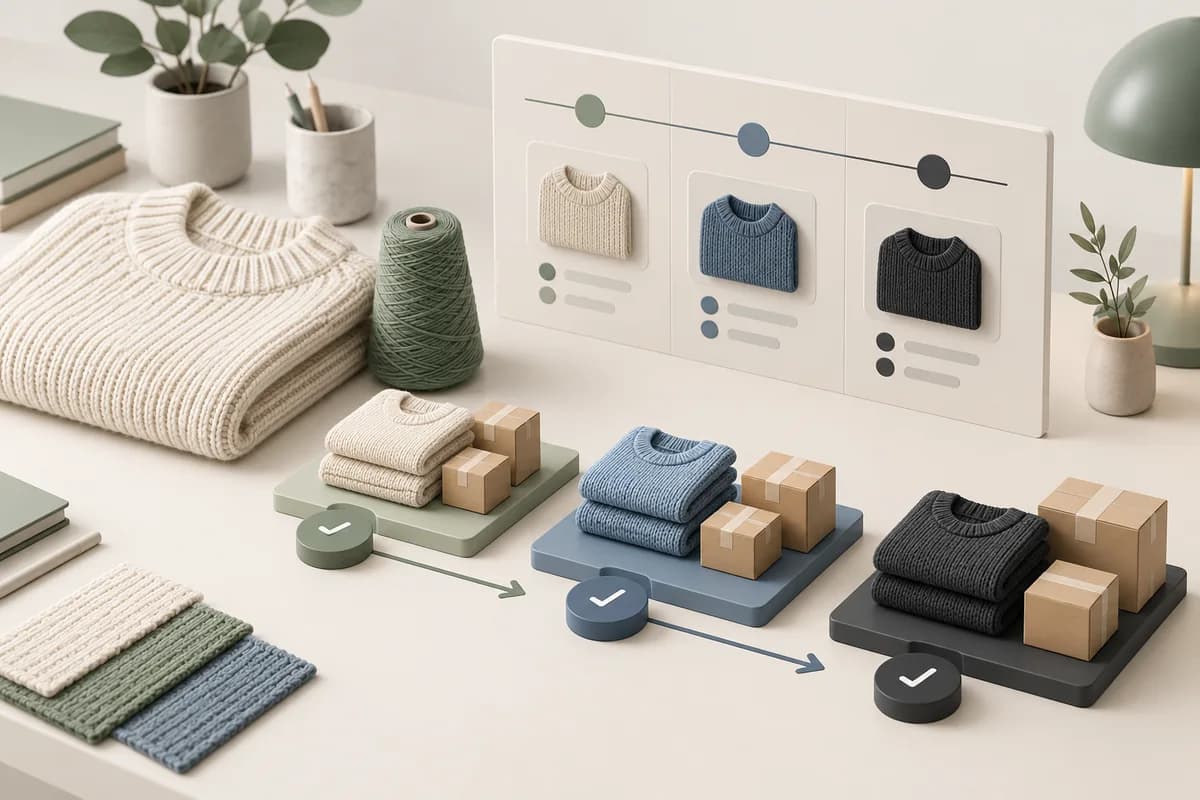
For a bulk sweater order delivered in stages, agree one order-level specification and a separate release plan for each shipment. Each release needs a fixed style, colour and size allocation, destination, required warehouse receipt date, production milestones, approval owner and dispatch authorisation. Confirm yarn availability and factory capacity for the whole order as well as the first batch. A total purchase quantity alone does not confirm when individual batches will be ready. This guide focuses on coordinating a firm order across several delivery windows, rather than choosing a general lead time.
Distinguish a firm order from a forecast or optional call-off
State which quantities are committed and which are only a forecast. If a later shipment depends on a future buyer instruction, agree the deadline for that instruction, how much material or capacity is reserved, and when the reservation expires. Ask what happens if the buyer reduces, delays or cancels a release: identify any agreed material, work-in-progress or storage responsibility in the order terms. Do not assume that a forecast secures capacity or that the price for the full collection applies to a smaller committed batch. Confirm any capacity or material reservation in writing with its conditions.
Build a reconciled release matrix for the actual selling plan
Allocate by the receiving warehouse and selling window, then break each release into style, colour and size. If the first launch needs all sizes of a style, say so; a batch with the right total but missing key sizes may not support that launch. The example below is hypothetical: one firm 18,000-piece order divided into three 6,000-piece releases. It is not a WTBF production record or a recommended batch size. Each row still needs its own SKU matrix and agreed dates. Keep one master revision so the same pieces are not allocated twice.
| Release | Quantity | Buyer purpose | Cumulative allocation |
|---|---|---|---|
| A | 6,000 pieces | Initial launch assortment | 6,000 pieces |
| B | 6,000 pieces | Second selling window | 12,000 pieces |
| C | 6,000 pieces | Final planned delivery | 18,000 pieces |
| Order total | 18,000 pieces | All allocations must reconcile | 18,000 pieces |
Work backwards from receipt, with separate date meanings
Start with the required warehouse receipt date and ask the appointed transport partner to estimate transit, destination processing and receiving time for the actual route. Work backwards to a planned dispatch date, then allow agreed time for packing, final review and any corrections before release. Separately record material readiness, sample approval, production start and production completion. Label each date as required, estimated or confirmed and name who confirms it. Do not put an unverified universal transit duration into the plan. Reconfirm arrival feasibility before fixing a campaign or retail launch.
- Required warehouse receipt: buyer or receiving team owns the requirement.
- Estimated transport and destination time: confirm with the appointed transport partner.
- Confirmed factory milestones: agree after material and capacity review.
- Dispatch authorisation: name the approver and the documents required.
Review capacity and bottlenecks across all three batches
Ask whether the releases will use consecutive production slots or overlapping work, and check knitting, linking, finishing, inspection and packing capacity for the actual styles. A completed knitting stage does not mean finished garments are ready to ship. Review material arrivals, approved trims and later batches before confirming the first release: an early batch should not consume yarn or labels already allocated to the next one without a revised plan. Ask for the earliest feasible schedule and the constraints behind it. WTBF’s annual capacity of one million garments is a planning fact, not an available daily rate or a promise that a large order can ship in seven days.
Use approval gates and record partial-release exceptions
Before production, agree the approved sample and specification revision that applies to each batch. Before dispatch, review that batch’s actual quantity, agreed quality checks, packing list and carton allocation. Confirm whether the buyer, factory or appointed inspection party provides each approval. If part of a batch is held for correction, record the affected SKUs, released quantity, held balance and next review date. Do not move the held pieces into another batch silently or count unfinished work as shipped. Ask how a split release affects transport, documentation and receiving arrangements.
| Gate | Evidence to agree | Decision owner |
|---|---|---|
| Production release | Approved specification, materials and capacity slot | Named buyer and factory contacts |
| Shipment review | Actual SKU quantities, agreed checks and packing list | Agreed review or inspection owner |
| Dispatch authorisation | Accepted exceptions, shipment scope and transport readiness | Named dispatch approver |
Make schedule changes a controlled decision
For a delayed approval, new colour, quantity increase or changed destination, ask for a revised impact assessment before accepting the change. Record the affected releases, material availability, capacity slot, cost assumptions and estimated receipt dates. Agree who approves the revised order and by when; version the release matrix and mark the previous version as superseded. A practical progress review compares planned and actual milestones, the remaining quantity by SKU, the next decision needed and its owner. If a release cannot meet the receipt requirement, request feasible alternatives and their costs instead of treating a tentative date as a guarantee.
Ask WTBF for a capacity-based staged-delivery proposal
Send the total committed quantity, SKU allocation for each release, product references or tech pack, material priorities, destinations and required receipt windows. Include approval deadlines and whether partial shipments are acceptable. Ask WTBF to confirm material readiness, production slots, release conditions and separately charged handling or storage items before ordering. WTBF accepts 1,000–1,000,000-piece bulk projects and retains a 50–100-piece small-order route. Eligible projects may allow three-day sampling or seven-day dispatch after requirements and materials are confirmed; final lead times are agreed per order and large orders need capacity-based scheduling. International receipt requires a separate transport plan.
- One order specification and revision, with committed versus forecast quantities.
- A reconciled style, colour and size matrix for each release.
- Warehouse destinations, receipt windows and approval contacts.
- Requested production milestones, dispatch gates and change terms.