All articles04

Bulk buying · Changing suppliers

Changing knitwear suppliers: what to hand over before repeating a bulk order

Treat a supplier change as a new development and approval project. Give the new factory an identified reference and usable specifications, agree how differences will be assessed, and reconcile the old and new suppliers’ responsibilities before placing the replacement production order.

By WTBF · Knitwear buying guides

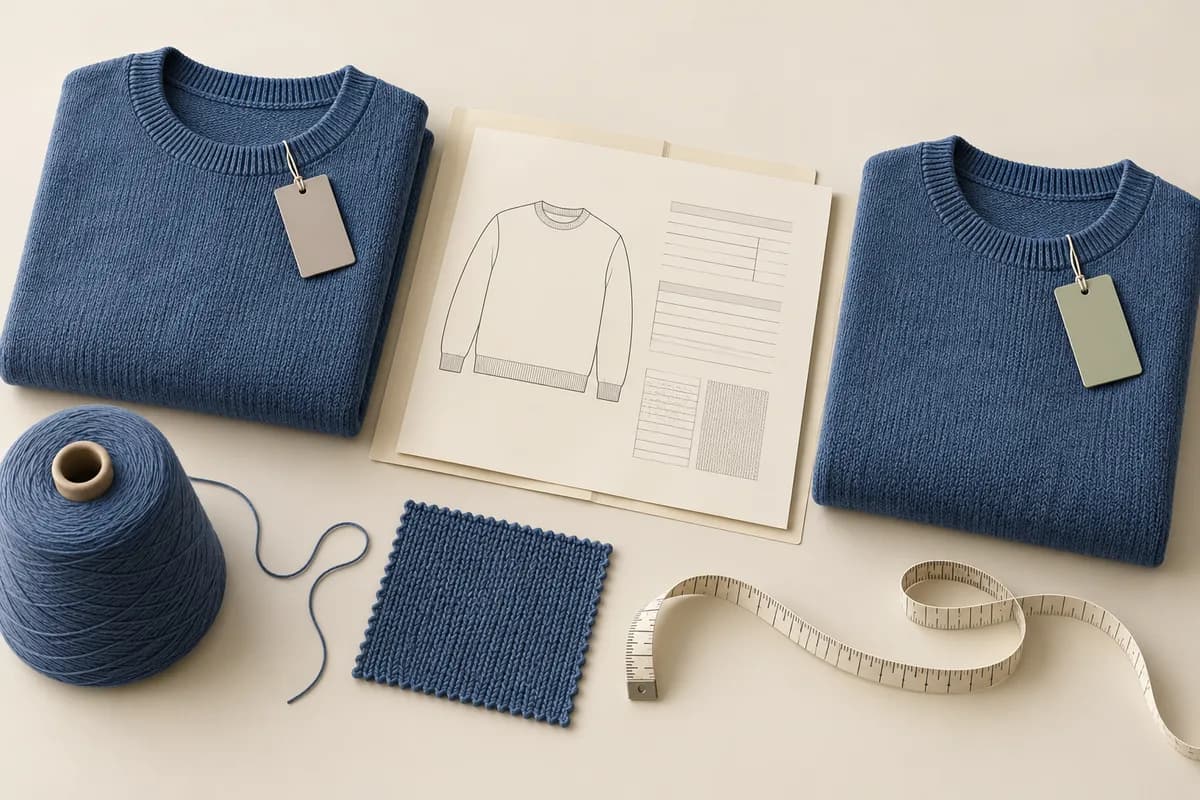
Concept illustration of two blue sweater samples with different blank tags beside a garment specification folder, matching yarn and knitted swatch.

Identify the design and the information you can actually supply

Start with the current approved garment, its sample ID and the dated specification that describes it. Include finished measurements and tolerances, yarn and colour references, knit details, labels, trims and packing. Identify which physical sample is the reference and whether it has been washed, worn or otherwise changed. List the files and materials available to the new supplier, with permission to share them confirmed. Do not assume the previous supplier’s knitting files, patterns or production instructions are included. Ask the new factory what it needs to develop its own proposal. Record missing information before requesting a repeat price; a reference garment is a comparison object, not a complete transfer package.

Define which differences are acceptable in the new sample

Separate requirements that must remain from details open to a proposed alternative. Request a written list of differences in yarn, construction, measurements, finishing, trims and packing. Compare the new finished sample with the identified reference using the same preparation and measurement conditions. Include the selected sizes and colours needed to judge the change, and retain an untouched comparison garment. A similar photograph or the same composition name is not a buyer approval of feel, weight, shade or fit. Agree any care checks and external tests separately. Approve the new supplier’s sample and specification together; do not carry over an old approval as proof that the new production has been approved.

Close the material and quantity handover before booking production

For each outstanding order line, record the supplier responsible, remaining garment quantity and approval status. Separately list yarn, buttons, labels and packing materials that might move between suppliers. Record the owner, location, item identity, quantity offered for transfer and quantity accepted as usable. Identify freight, handling and incoming checks to be arranged. Goods still at the previous factory are not automatically available at the new factory, and an unconfirmed balance should not be deducted from a new purchase requirement. Keep old finished stock, transferred materials and newly purchased materials separate in the records. Agree how rejected materials and unused balances will be handled before buying or allocating the same stock twice.

Quote the change as a defined project and approve its first production

Send WTBF the permitted reference files, available samples, required quantities by style, colour and size, destination and required arrival date. Mark what is fixed, what may change and which information or materials are still missing. Request separate confirmation of development work, samples, testing, transferred-stock handling and production costs. Plan sample approval, material acceptance, production review and dispatch as distinct decisions, based on confirmed capacity. If old and new suppliers will both deliver, identify their production lots and agree receiving comparisons rather than mixing them under one unidentified reference. Begin with the bulk inquiry form to discuss the handover. Confirm the new production against its own approved sample and records before treating the supplier transfer as complete.

Discuss your knitwear projectBack to Blog