Start with the intended wear and the knit construction
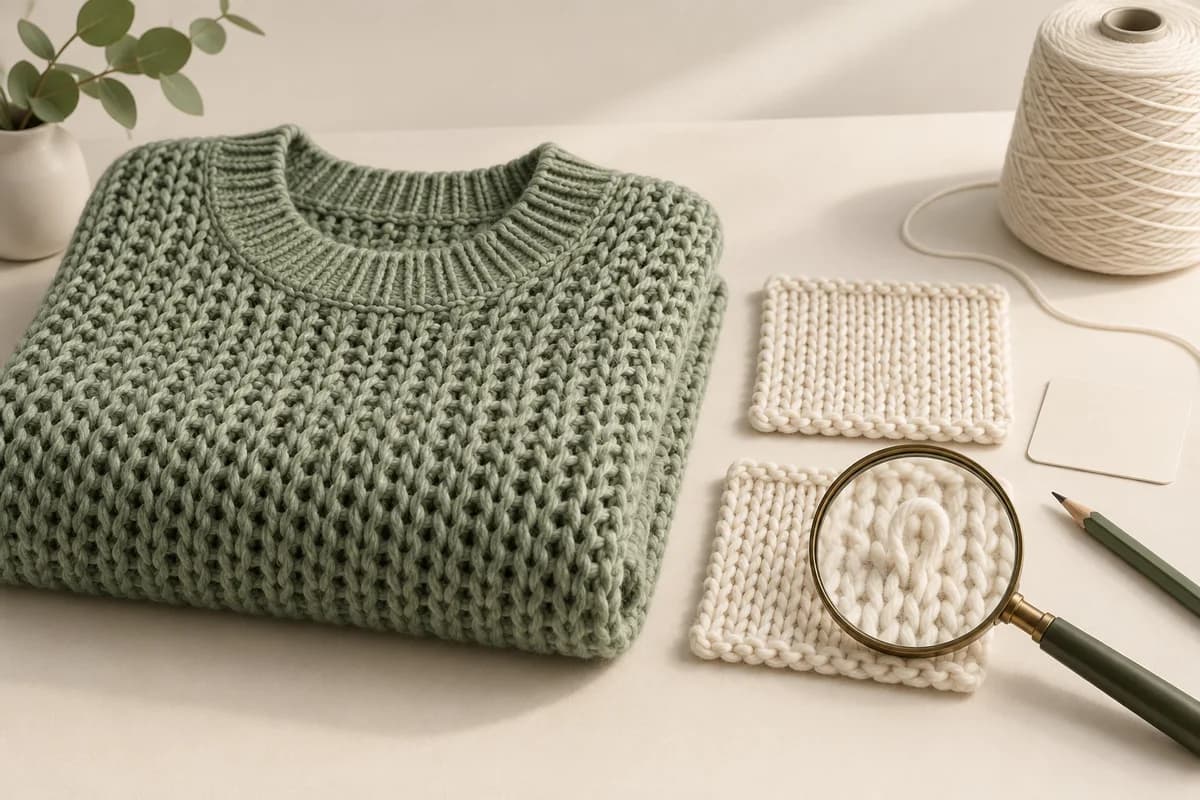
A brand developing loose-knit pullovers for layering needs a clear decision about visible pulled loops, not only a soft handfeel reference. Describe the garment use, proposed yarn, stitch structure and finishing. Identify open areas, decorative loops and surfaces that may contact bag straps, jewellery or fasteners. Ask for development samples in the proposed construction rather than judging from a yarn cone. Agree which appearance characteristics must remain and which material or structure changes are acceptable if the first sample does not meet the buying brief. This is a product requirement to investigate, not a claim that every loose knit will fail.
Separate snagging from pilling and existing damage
Record whether an observation is a protruding yarn loop, a pulled line, a hole, loose fibres or a surface pill. These descriptions help the supplier and testing provider investigate the correct issue. A pilling report concerns a different requirement and cannot release snagging approval. Photograph the sample before assessment, identify the location and keep an intact reference. Damage already present after handling or packing should be recorded separately from damage produced by an agreed test. Do not pull loops with an improvised hook and present the result as a standard laboratory assessment.
Check method suitability before ordering a report
The public ASTM D3939/D3939M-26 scope excludes open constructions such as nets from its mace method. Its guidance also cautions against commercial shipment acceptance using this method because between-laboratory precision is poor. Ask a qualified testing provider to assess suitability for the actual knit and intended decision, and to propose an alternative where necessary. Agree the method and edition, specimen preparation, directions, care state, assessment and report needs. Do not prescribe the mace method to every loose knit or treat a standard number as a universal pass limit. Resolve method suitability and how results will be used before placing the test order.
Keep a usable approval record
Link the finished sample and any specimens to the style, colour, yarn lot, knit specification and finishing revision. Agree whether assessment is before care, after a specified care procedure, or both. Record the laboratory result separately from a practical garment review. For visual decisions, retain agreed reference samples or clear photographs, viewing conditions and descriptions of acceptable and unacceptable changes. Specify who reviews disagreements. A supplier and buyer should not compare unexplained grades from different methods as though they were equivalent.
| Decision | Record to retain | Condition to confirm |
|---|---|---|
| Method suitability | Construction, proposed method and provider advice | Suitable evidence for the buying decision |
| Appearance acceptance | Identified sample and agreed visual references | Limits, care state and reviewer |
| Production coverage | Yarn lot, knit and finishing revision | Which goods are approved or still on hold |
Reapprove changes and keep bulk coverage explicit
If the sample misses the agreed requirement, ask for a revised proposal before committing production. Changes to yarn, stitch density, structure or finishing may also affect weight, handfeel, fit, appearance, cost and timing; review the revised garment as a whole. Recheck the relevant requirements and record the approved revision. Decide which colours, yarn lots and production batches need separate evidence. For goods already produced, keep affected stock identifiable and agree a written inspection or disposition plan. A corrected development sample does not automatically approve earlier bulk goods. Include handling and packing checks so avoidable damage is found before shipment.
Send an RFQ with the open decisions identified
Send WTBF the sweater reference or tech pack, intended use, yarn and construction priorities, quantity by style and colour, destination and required arrival date. Include the buyer specification, available sample or report, proposed snagging assessment and named approval contact. If the method is undecided, request a feasibility discussion and testing-provider review before asking for a final test price. Confirm sample quantities, testing responsibility, costs, revision allowance and production release points in the quotation. Agree material availability and capacity-based milestones after these requirements are known. Keep factory dispatch and destination arrival as separate dates.
Questions about this guide
Does a good pilling result also approve snagging?
No. Pilling and snagging address different surface changes. Identify suitable evidence and acceptance requirements for each before releasing the order.
Can the same snagging method be used for every loose knit?
No. Construction and intended use affect method suitability. Ask the testing provider to review the actual material, particularly open constructions, and agree how the evidence supports the buying decision.