
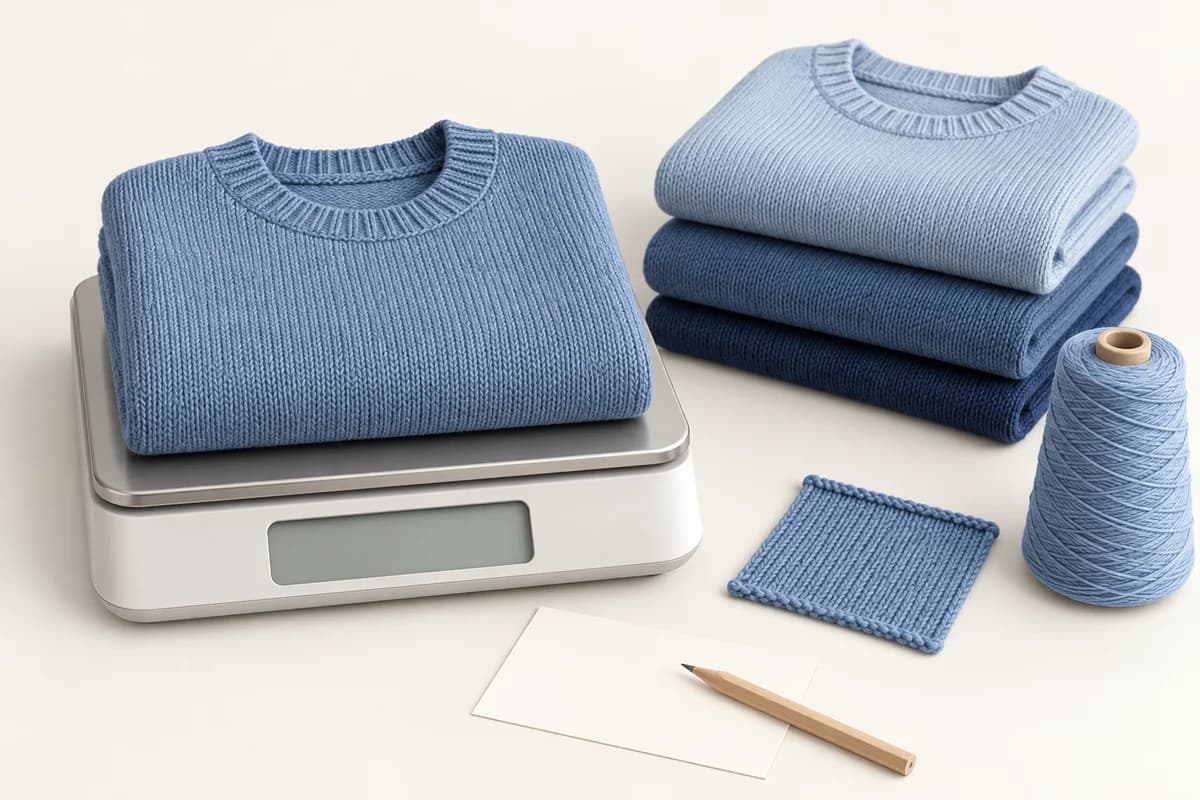
Define what the quoted weight includes
For an overseas brand buying a sweater range, “about 400 g” is only a starting brief. State whether the figure means one finished garment, a knitted panel, yarn consumption per piece or a packed shipping unit. For finished garment weight, identify the style, size, colour, approved yarn and finishing revision. Agree whether permanent labels, buttons and other attached trims are included; remove loose hangtags, bags and inserts if the agreed requirement excludes them. Fabric weight in grams per square metre is a different measurement from the mass of a whole sweater. Compare quotations using the same definition.
Approve weight by size with the finished sample
Measure and weigh samples after the intended garment finishing, using the same preparation method planned for production checks. Record the actual sample result, then agree the target and acceptable range for each size or explicitly defined size group. Do not copy a medium-size weight to every size or assume a fixed increase between sizes. Pattern area, knit structure and trims must be considered together. Approve measurements, hand feel, opacity and appearance alongside weight: a sweater meeting its mass target may still fail other agreed requirements. A yarn, stitch or finishing change requires review of the weight reference as well as the fit.
Use comparable weighing conditions
Agree how garments are prepared before weighing and keep that method consistent at the factory and receiving warehouse. Do not compare a newly steamed or damp garment directly with a reference prepared differently. Record the preparation, weighing date, scale identification, units and resolution, and verify the scale before the check. Remove external packaging and support the whole garment on the scale without contact with the table. If the buyer requires laboratory conditioning, specify the applicable method and laboratory scope. ISO 139 describes standard atmospheres for conditioning and testing textiles; it does not supply a universal sweater weight tolerance or certify this order.
ISO 139:2005 — scope of textile conditioning and testing atmospheres
Write acceptance rules that cannot hide individual failures
State whether acceptance applies to each checked garment, an agreed sample average, or both. Define sample selection across sizes, colours and production batches, the number to check, rounding and the action for an out-of-range result. Do not invent an inspection rule after seeing the shipment. The table below is a hypothetical explanation of individual limits, not a WTBF specification, industry tolerance or recommended target. Its three results are checked garments only and do not establish the condition of an entire batch.
| Checked garment | Measured weight | Result under this example |
|---|---|---|
| Piece A | 376 g | Below the agreed lower limit |
| Piece B | 400 g | Within the agreed range |
| Piece C | 424 g | Above the agreed upper limit |
| Three-piece average | 400 g | Does not cancel the two individual failures |
- Keep each result linked to its garment size, colour, batch and approved reference.
- For a disputed result, hold the affected scope and agree repeat preparation, reweighing and further checks before accepting or reworking stock.
Keep finished weight separate from the yarn purchase plan
A finished sweater weight is not automatically its purchased yarn requirement. Attached trims and the agreed garment condition are part of the garment definition, while development, production losses, unusable stock and agreed reserves belong in a separate material plan. Confirm consumption through an appropriate production trial and use the actual size and colour quantities. Do not calculate every size from one sample or add an unexplained percentage. Ask the supplier to show the basis of the material estimate and clarify what changes require a revised quotation. Weight alone cannot verify fibre composition, durability or the accuracy of a material claim; arrange any required evidence separately.
Put the weight brief into the bulk inquiry
Send WTBF the product reference or tech pack, yarn priorities, intended finished weight by size, approved measurement chart, quantity per style and colour, destination and required arrival date. State the weighing and acceptance method, any test requirements and whether the weight is a development direction or a confirmed requirement. Request sample and material costs separately from the bulk unit price, then confirm the reference, limits and production schedule before release. Large orders require capacity-based scheduling; dispatch and destination arrival are separate milestones. If fit, appearance and weight cannot all meet the brief, approve a revised specification and price before production rather than silently reducing garment size.
- Retain the approved sample, weight table and preparation method under one specification revision.
- Ask for the proposed sample checks and order-specific inspection plan with the quotation.
- Use the bulk production inquiry to discuss the requirement; the final limits, price and schedule need confirmation.
Questions about this guide
Is a single sweater sample enough to set the weight for every size?
No. Record the reference size and agree targets or ranges for the actual size assortment after sample development. Check weight together with dimensions and appearance rather than applying one sample mass to every size.
Does an acceptable average mean all checked sweaters pass?
Only if that is the expressly agreed acceptance rule. If individual limits apply, an acceptable average does not cancel pieces outside those limits. Agree the method and action before production.