All articles47

Fit and fabric review · A-line knit skirts

How to Check the Drape of an A-Line Knit Skirt

A skirt’s drape comes from the combined effect of yarn, knit structure, weight, silhouette and finishing. Review a representative sample in motion as well as on a flat table.

By WTBF · Knitwear buying guides

An A-line knit skirt hanging naturally beside yarn and fabric swatches in a boutique product studio.

Start with the intended fall and silhouette

Describe where the skirt should sit at the waist, how closely it follows the hip and where the flare begins. State the intended length and hem sweep, and provide a reference image or sample showing the movement you want. A-line can describe very different proportions, from a subtle release below the hip to a fuller swing. Mark the points that must remain stable across sizes, such as waistband comfort, hip ease and the balance between front and back.
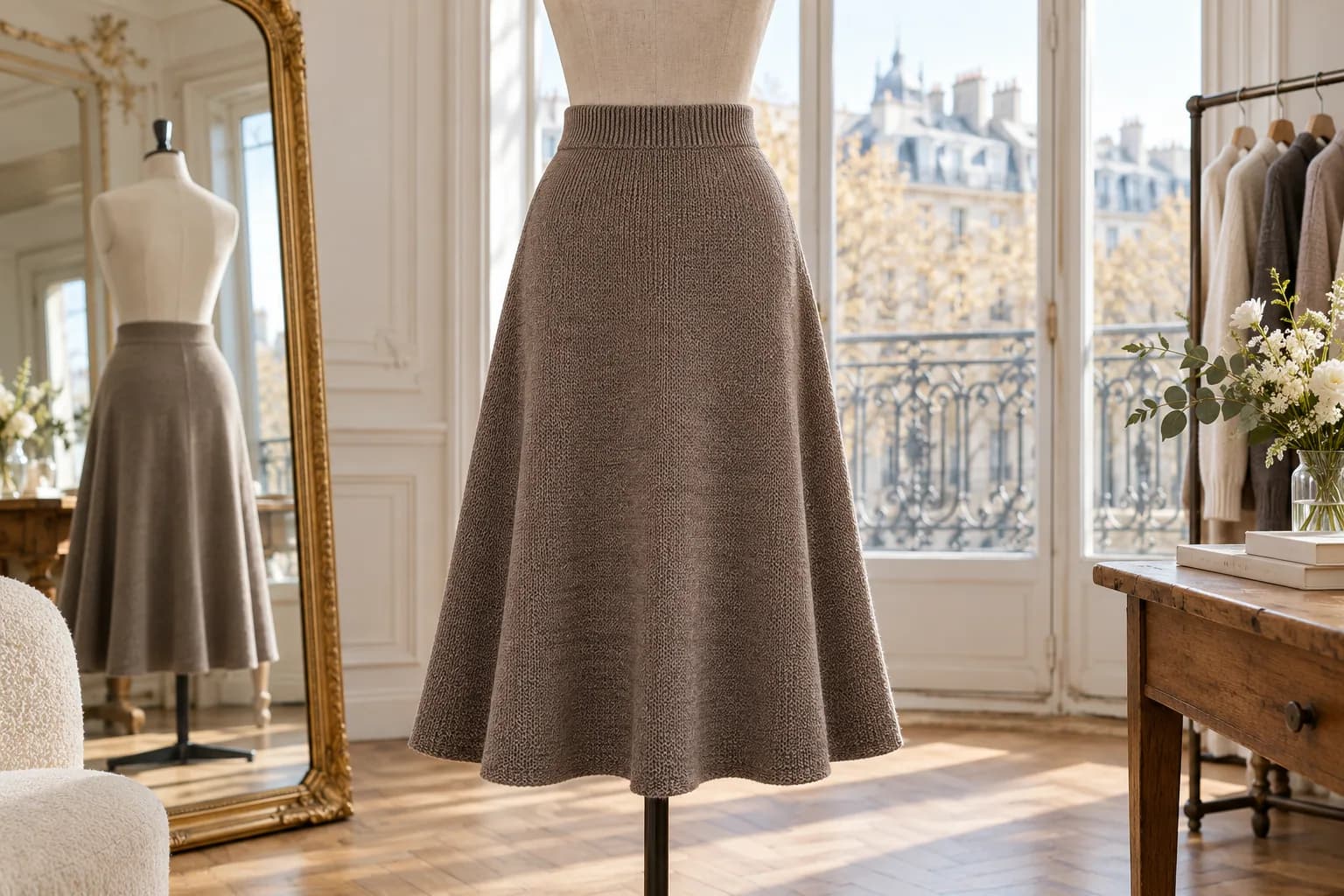
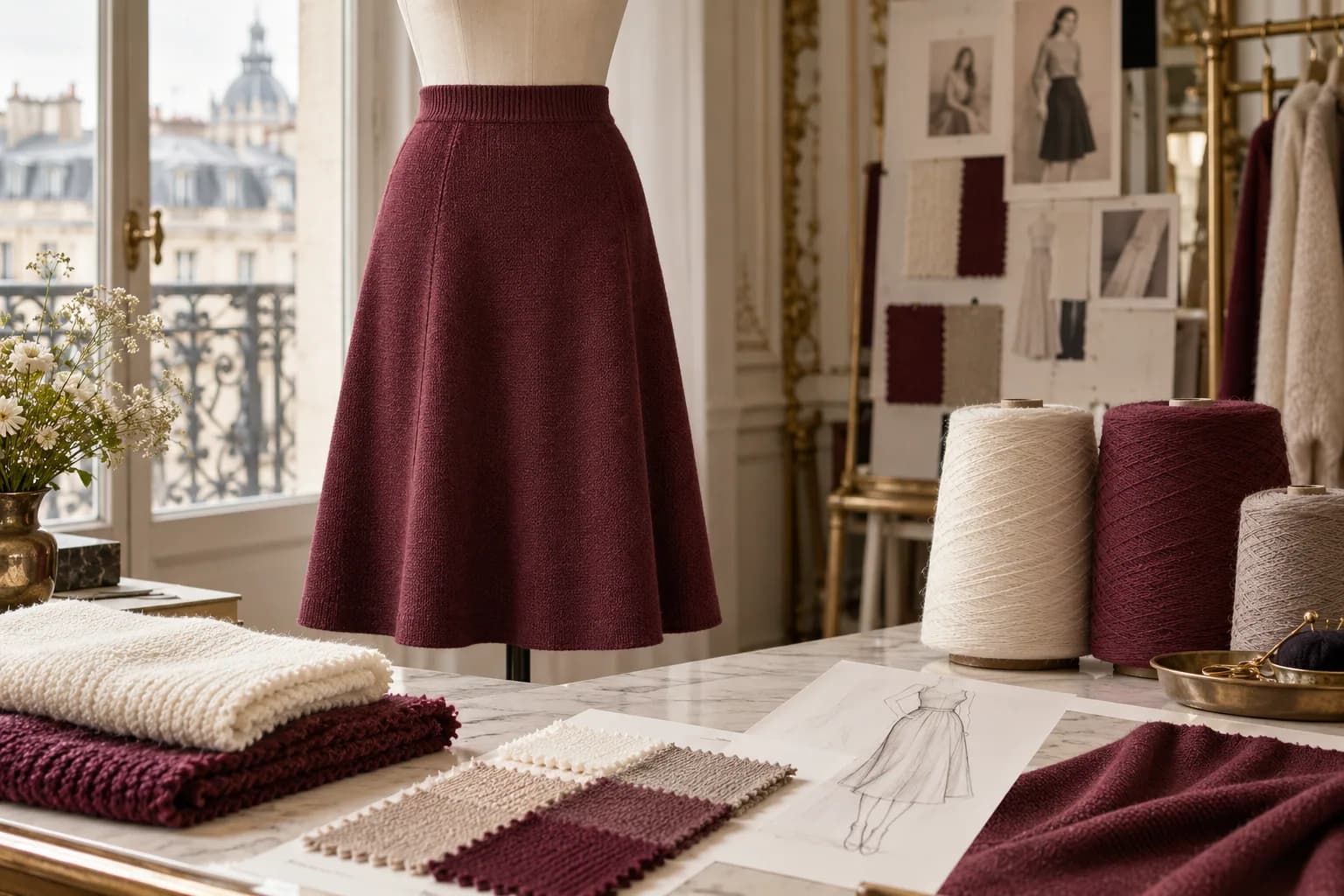
An A-line knit skirt displayed on a dress form to show its waist, hip and hem proportions.

Review yarn, stitch and weight together

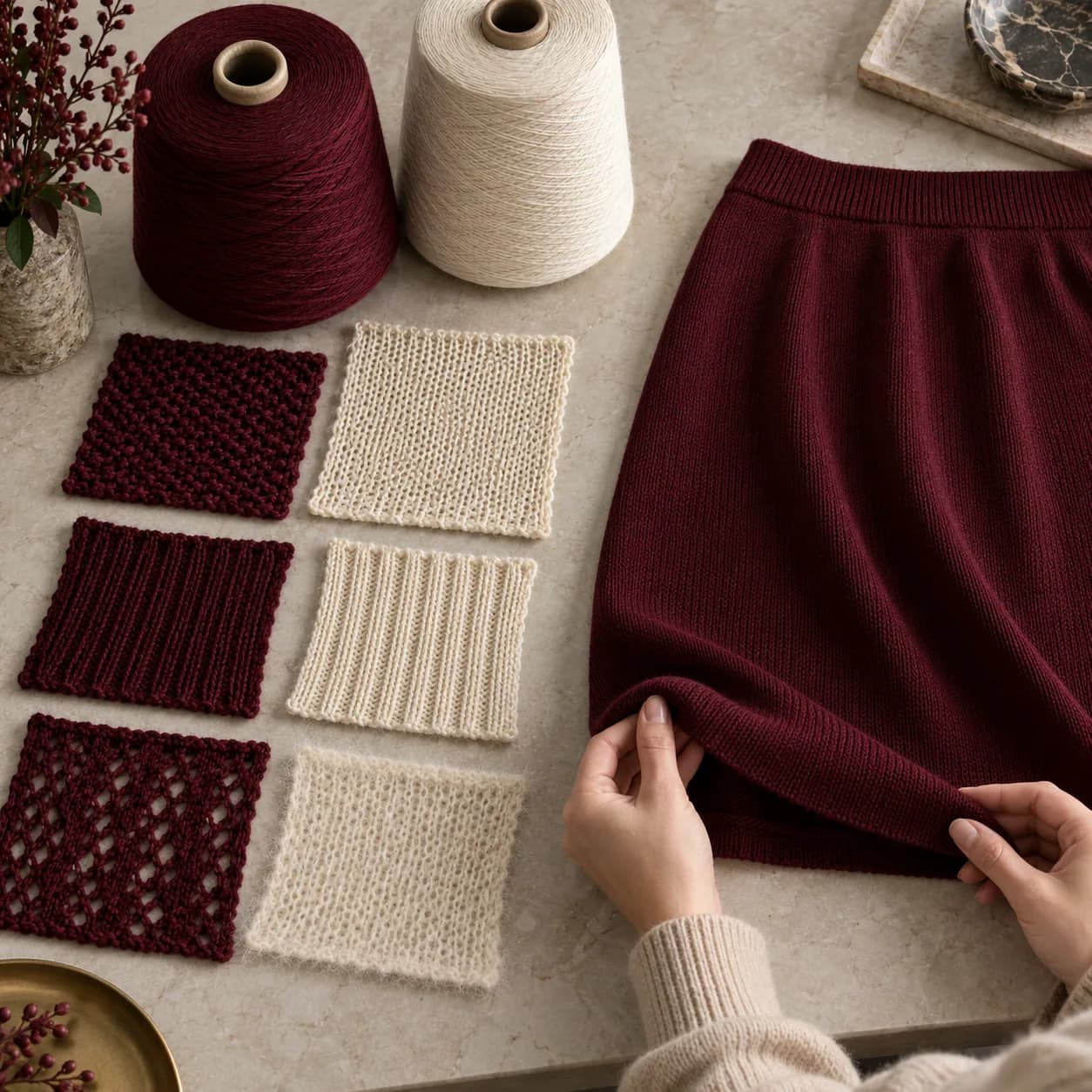
Ask for the yarn composition, yarn size or available specification, stitch structure and sample weight. A denser or heavier knit may hang closer to the body, while a more open structure may move differently and need a considered lining or finish; do not infer the result from yarn fibre alone. Compare swatches made in the proposed structure, then review the completed sample because stitch scale and garment dimensions change the visual effect. Record the approved hand feel and weight direction for repeat reference.

Knit swatches and yarn cones reviewed beside a skirt panel for drape and weight.

Check the garment while standing and moving

Try the sample on the intended fit model or use a consistent dress form. Review it from front, side and back, then check walking, turning and sitting. Look for twisting seams, a hem that lifts unevenly, cling at the hip, unwanted transparency or a flare that collapses. Photograph the sample at the same distance and with the same underlayer so revisions can be compared fairly. If the waistband or hem finish changes the hang, evaluate the complete finished sample rather than a loose panel.

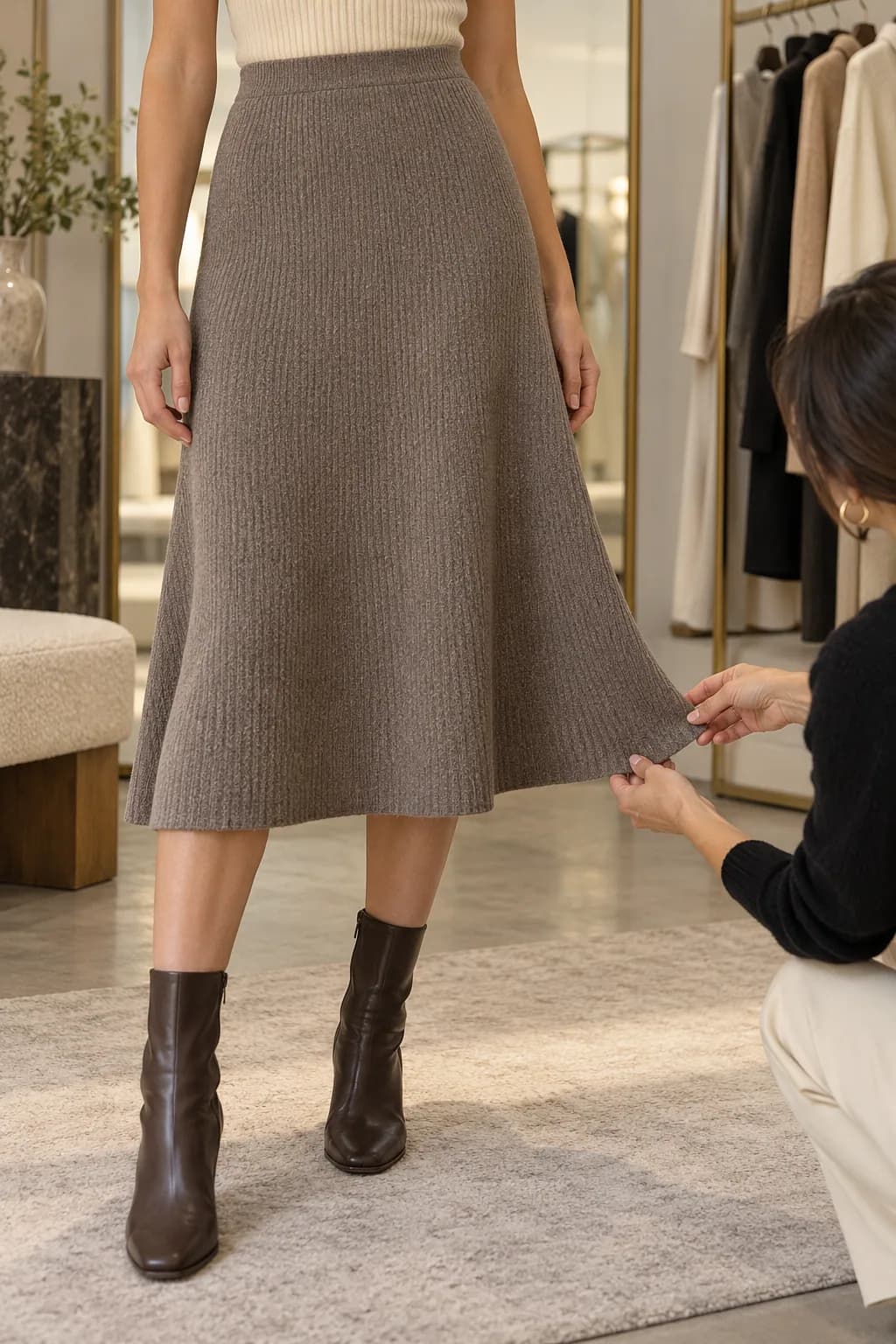
A buyer checking the fall and hem balance of an A-line knit skirt worn on a fit model.

Record the approved sample and revision points

Write down the yarn and stitch reference, finished measurements, waistband and hem construction, sample weight and any agreed finishing process. For each correction, identify the area, target result and whether it applies to every size. Review a revised sample when the change could alter drape or fit; a photo of one detail may not show the overall silhouette. Send WTBF the reference, target measurements, quantity breakdown and material direction to discuss a sample plan and project quotation.

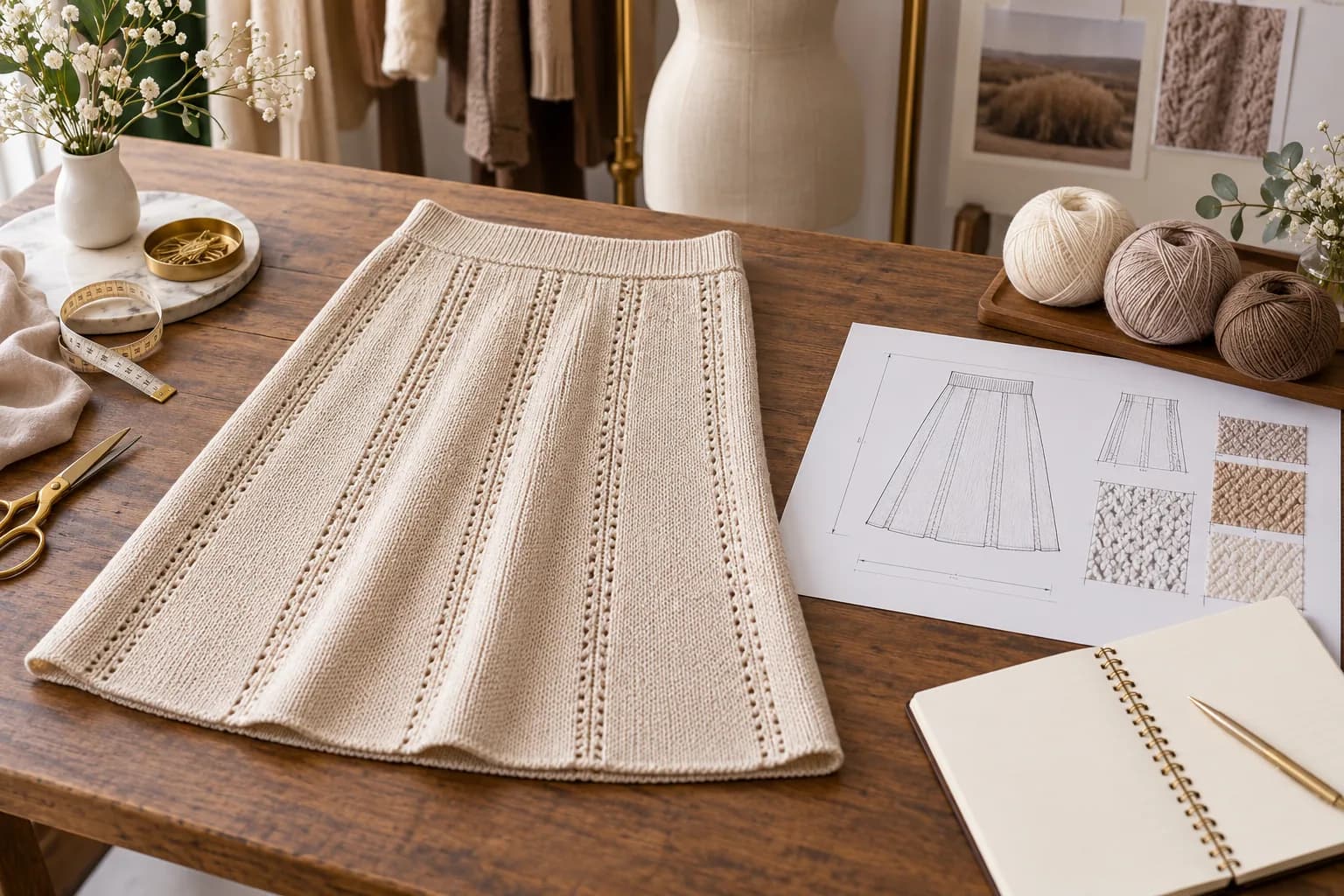
A finished A-line knit skirt sample beside measurement notes and buyer approval comments.
Discuss your knitwear projectBack to Blog