Describe the wearing situation, not just “not see-through”
An importer ordering cream spring sweaters should first decide whether the product is intended as a standalone top or a layer over another garment. Identify the areas that matter, such as the chest, upper back and sleeves, and state whether an underlayer is included, required or optional. Share a reference for the desired coverage as well as the desired handfeel. The buyer and supplier need the same visual target; a request for a light, airy knit does not by itself define acceptable show-through.
Make sample comparisons repeatable
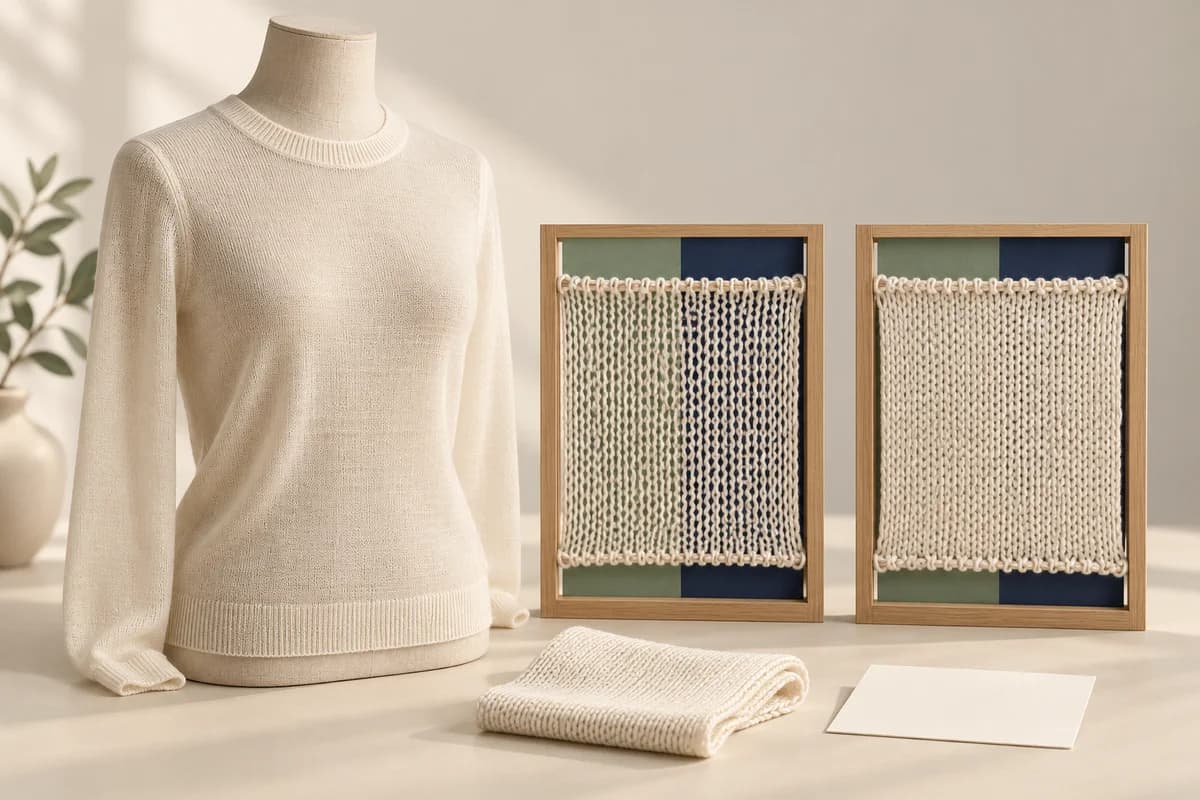
Compare single-layer, finished knit samples over the same identified backing materials, using agreed front lighting and any relevant backlighting. Record the light source, viewing distance, backing colour and whether the knit is relaxed or extended to a stated dimension. Avoid comparing a folded sample with an unfolded one. Keep the physical references and photographs of the setup; automatic camera exposure can hide differences, so images should support the physical review. For remote approval, send the sample and ask the approver to use the agreed setup.
Check the complete garment across the intended fit range
Review the finished sweater in the intended sizes on suitable fit forms or fit models, with the agreed underlayer or backing. Observe the chest, elbows, upper back and other areas affected by the actual fit, including agreed normal movements. A loose middle-size sample does not approve a closely fitted size at the edge of the range. Repeat the agreed appearance checks after the specified care procedure when this is part of the order requirement. Record which colours and sizes were reviewed and which further samples are needed.
| Decision | Reference to keep | Condition to confirm |
|---|---|---|
| Wearing intention | Standalone or layering brief | Whether an underlayer is required |
| Viewing setup | Identified lights and backing | Distance, garment state and extension |
| Garment coverage | Finished colour and size samples | Areas and movements to review |
| Production release | Approved physical reference | Approver, limits and changes needing review |
Compare corrective options before changing the specification
If coverage is insufficient, ask the supplier to propose alternatives such as a different yarn, a tighter construction, a different knit structure or an agreed lining or separate underlayer. Compare the finished result for coverage, handfeel, weight, drape, fit and care behaviour together. More coverage may change the product the buyer originally wanted. If an underlayer becomes part of the supplied product, specify its material, sizes, quantities, attachment or pairing and packing. Obtain revised sample charges, unit price, material requirements and schedule before approving an option. Do not allow an unrecorded yarn or construction substitution.
Agree an order-specific decision rule
Retain the accepted sample and any agreed boundary samples, identify the review conditions and name the person who can release production. Ask a qualified laboratory to assess a suitable method if an instrumental result is needed. Method scope matters: AATCC TM203-2021 describes light-blocking measurement for window-covering textiles. Its public scope does not establish a universal pass level for a sweater worn on the body. An instrument result needs an agreed method, specimen state and acceptance rule; it does not automatically replace the garment fit review. Define bulk lot coverage, how to hold disputed goods and when a material, colour, fit or finishing change requires renewed approval.
Include coverage requirements in the bulk quotation brief
To discuss a pale knitwear order with WTBF, send the garment reference, intended layering, fibre or yarn priorities, size range and quantities by style, colour and size. Add the desired coverage reference, proposed viewing conditions, care requirements, destination and target arrival date. Request feasibility feedback and sample options before confirming production. Large orders need a schedule based on material availability, sample approval and available capacity; factory dispatch and arrival are separate dates. Use the project quotation form to share confirmed details and identify decisions still open.
Questions about this guide
Does a heavier sweater always have enough coverage?
No. Do not approve coverage from garment weight alone. Compare the actual yarn, construction, colour and finished garment under the agreed viewing and fit conditions.
Can one cream sample approve every light colour and size?
Do not assume so. Agree the colour and size coverage for approval, identify the fit conditions and review additional samples where the appearance may differ. Keep a written release reference.